If you plan a self-drive road trip across Namibia, it can be a great way to see the country. Wide open spaces, desert roads, wildlife, remote towns — all that gives you freedom. But it also means you need to watch out. I want you to enjoy your journey without trouble. Find out is it safe to self-drive in Namibia.
In Namibia you often face long distances, gravel or sand roads, and few services outside the big towns. That can make things tricky. But with some preparation and respect for the road — and the land — you can travel safely.
I’ll walk you through what tends to go wrong for self-drive travellers, and what you should do before and during the trip. Think of this as a friendly chat with someone who’s done it before.
For a full step-by-step guide, see our complete Namibia Camping Safari Guide
Is It Safe to Self-drive in Namibia
What makes self-drive travel in Namibia different — and why you need to prepare
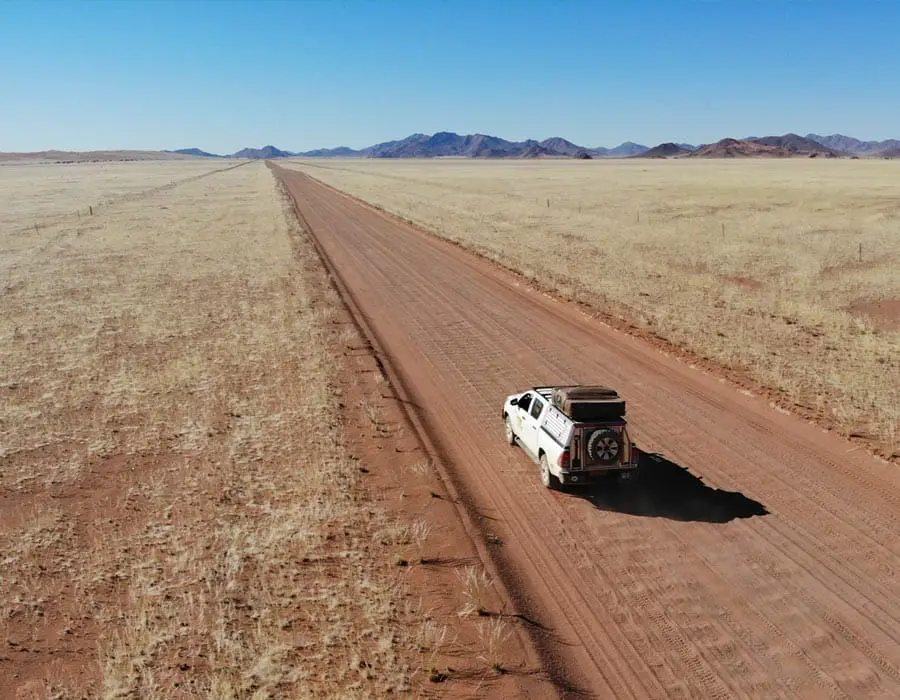
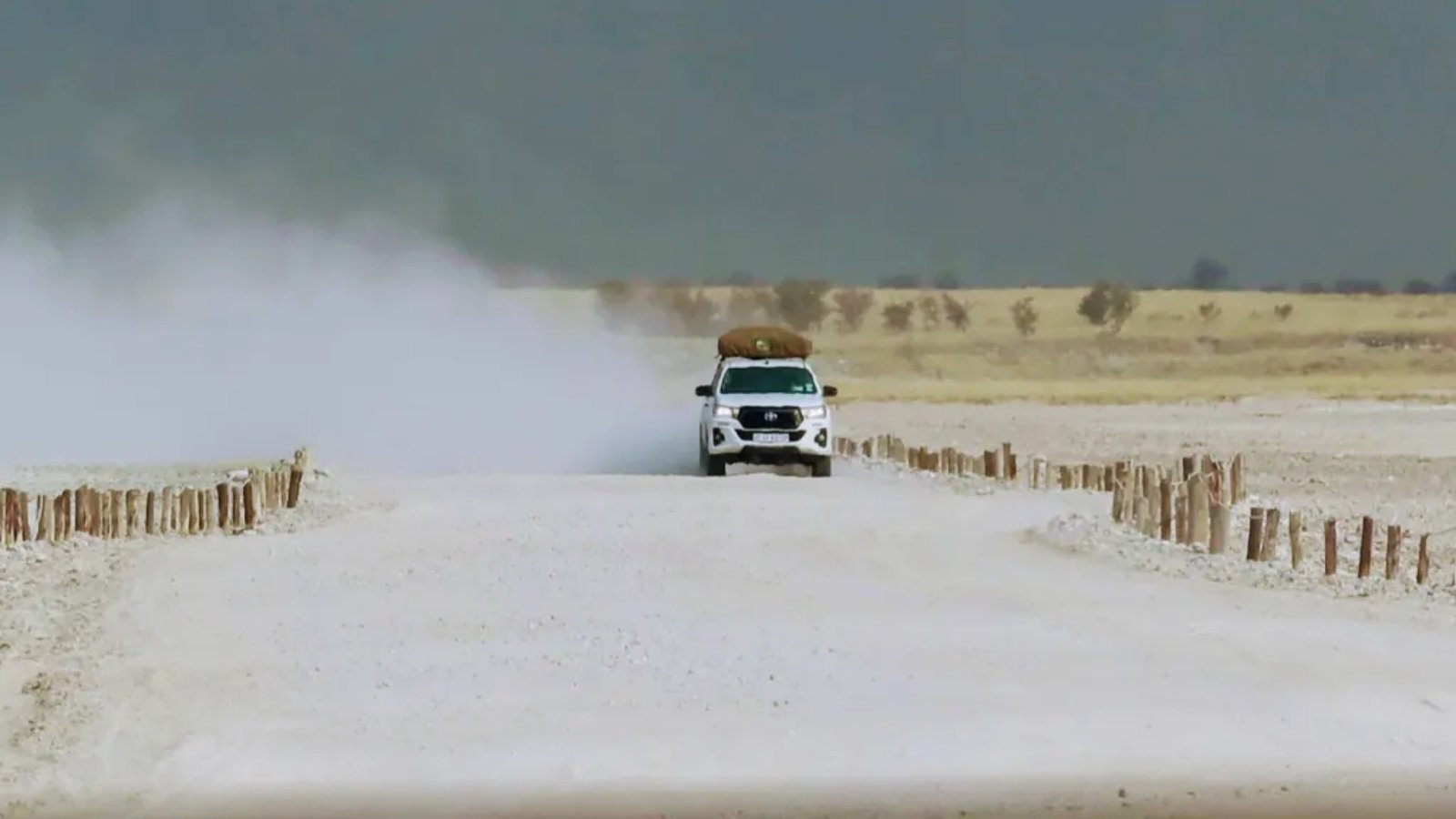
- Most of the roads outside main highways are gravel or sand roads. Even “well-graded” gravel roads can be rough or change quality suddenly.
- Wildlife and livestock roam freely. At dawn, dusk, or night animals often cross or walk on roads — antelope, kudu, goats, donkeys, even larger game near reserves.
- Distances are large. Towns, fuel stations, lodges can be many hundreds of kilometres apart. Running out of fuel or water in remote areas isn’t a small risk.
- In remote areas mobile phone signal is unreliable. GPS or online maps may not work sometimes.
- If you’re not used to gravel roads — driving fast or carelessly increases risk of tyre puncture, skidding, loss of control. That’s especially dangerous with few other cars around.
What you can do to stay safe — simple good habits for self-drive trips
- Use a proper vehicle. A 4×4 with good clearance and sturdy tyres is strongly recommended — especially if you plan to travel off main tar roads, go into desert, gravel, dunes or remote reserves.
- Drive carefully (not fast). On gravel or unpaved roads, keep speed low — many sources suggest around 60-80 km/h on gravel. That helps avoid accidents or losing control.
- Don’t drive at night (unless unavoidable). Night driving is risky because animals move around, and roads are often unlit. Many accidents with animals or roll-overs happen at night.
- Plan your route and fuel / supplies carefully. Fill up your tank whenever you can. Carry enough water, spare tyre(s), tools, a first-aid kit. Treat trips as rugged — be ready for basic survival if needed.
- Use reliable navigation — offline maps or good GPS. Mobile signal can disappear. Have paper maps or offline apps as backup.
- Stay alert to surroundings — wildlife, livestock, sand or gravel patches, changing road quality. On gravel roads, stones or soft sand can cause tyre damage or sliding.
- Respect local traffic rules. In Namibia you drive on the left. Obey speed limits, wear seatbelts, don’t drink and drive, use headlights when needed.
- Take breaks. Long drives + solitude + roads that might be rough = tiredness can catch up. Rest often, especially if you plan long distances in a day.
If you follow these — drive slow, respect road and wildlife, prepare well — self-drive in Namibia can be a great experience.
A few real risk
- Tyre punctures or flats are common if roads are rough, or if driving too fast on gravel. A small tyre leak could end badly if you’re far from town.
- At night, you might hit an animal or livestock — often because it’s hard to see, or animals show up suddenly. That can be life-threatening.
- Running out of fuel or water — especially on remote routes — can turn a fun trip into a danger. Distances can be misleading, detours common, help far.
- If you don’t know how to fix a flat tyre or deal with a breakdown — or you lack tools/spare tyre — you could be stuck for hours or longer in remote areas.
- Insurance and rental conditions matter a lot. Driving too fast, or off-road where not allowed, or at night — some rental companies void insurance. That risk isn’t worth the thrill.
Pointers for planning a self-drive trip in Namibia
Here’s to prepare for your self-drive:
- Check the route: map out fuel stations, rest stops, lodges/campsites — aim for realistic drive segments, not over 300-400 km per day.
- Fill fuel always when available (never risk running low), carry extra water and snacks.
- Download offline maps (or buy a physical road map), and plan with the assumption that there might be no mobile signal.
- Drive during daylight. Plan to arrive before sunset. Avoid night driving unless it’s unavoidable.
- Watch out for animals or livestock on roads — especially near nature areas and rural settlements. Slow down if you see movement near the road.
- Respect road rules — left-side driving, speed limits, seatbelts, lights. Don’t drink and drive.
- Rest if you feel tired. Don’t push long drives without breaks. Fatigue on gravel can lead to mistakes.
- Be humble — treat local land and wildlife with respect. Stick to roads. Don’t drive off-road where prohibited.
- Travel with patience. Expect some rough roads, some delays. If you accept that — you’ll enjoy the silence, the desert, and the wildlife.
- If you do all that — your self-drive journey in Namibia can be safe — and beautiful.
Enjoy the freedom to explore Namibia. We provide travellers with a unforgettable self-drive camping safari across Namibia. Our services include trip planning, campsite booking and 24/7 support. We organise fully equipped 4×4 vehicles, rooftop tents, camping equipment, and practical travel support. Our travellers get clear routes, real driving distances, and realistic time planning. No rush. No pressure. Just solid travel planning.
We focus on budget-friendly self-drive camping safaris that still feel safe and well prepared, supporting eco-friendly travel. We share real local advice. If a tyre blows or plans change, we’re there to help.
Our team lives and works in Namibia. We know the gravel roads, fuel stops, weather, and wildlife areas. We build routes that make sense, and keep the distances realistic. You travel at your own pace, sleep under the stars, and enjoy the freedom.
Let us arrange your camping safari. Join us for an adventure, turning photos into memories.
For a full step-by-step guide, see our complete Namibia Camping Safari Guide